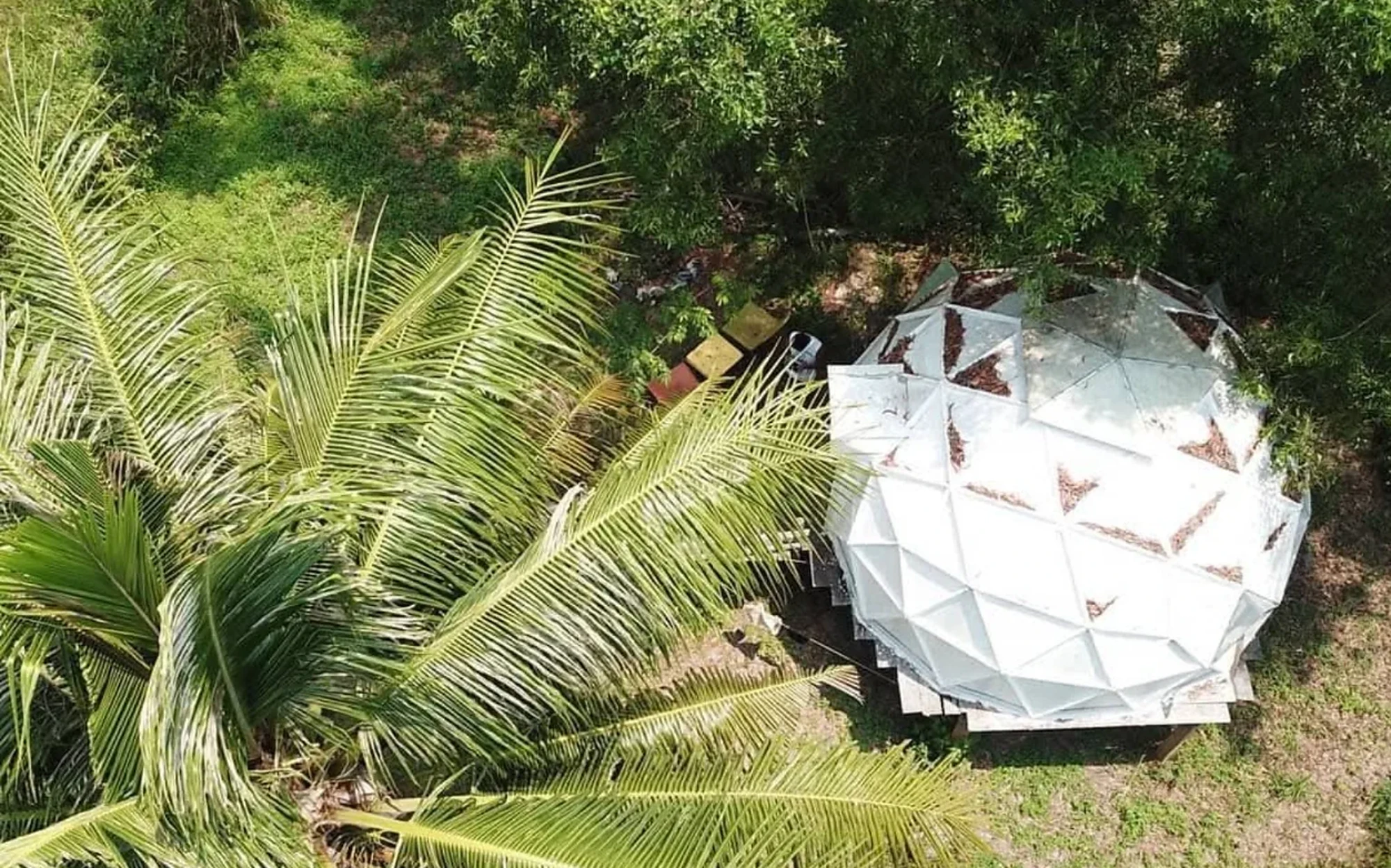
When I built One Love Dome — my first geodesic house — I was certain its unusual shape alone would make it a great rental.
I set roughly the same price as other bungalows in its class, registered it on booking platforms and waited. But my expectations were wrong: bookings were scarce, and the income was tiny.
At exactly that time, I started learning the foundations of TRIZ through the lens of business. For those unfamiliar with it, TRIZ — the Theory of Inventive Problem Solving — is a set of tools for solving complex or “impossible” problems effectively.
TRIZ was originally developed for engineers. Yet it turned out that the same thinking patterns work in business. It helps you find many possible paths to solve one problem, then choose the simplest, fastest or least expensive one.
So I learned by practising on my real rental business. Without going too deep into the methodology, the process looked like this:
- I framed problems as contradictions.
- I ran them through all 40 contradiction-solving principles and generated many options.
- I selected the strongest solutions and implemented them.
This approach accelerated my mind far more than I expected. Almost every solution produced the same inner reaction: “This is so obvious — how did I not see it before?”
For example, my first contradiction was:
Then I asked myself: under what circumstances, in what context, could this be true? I quickly realised that my house needed something other places did not have. More precisely, it needed to give people feelings they could not get from other rental homes.
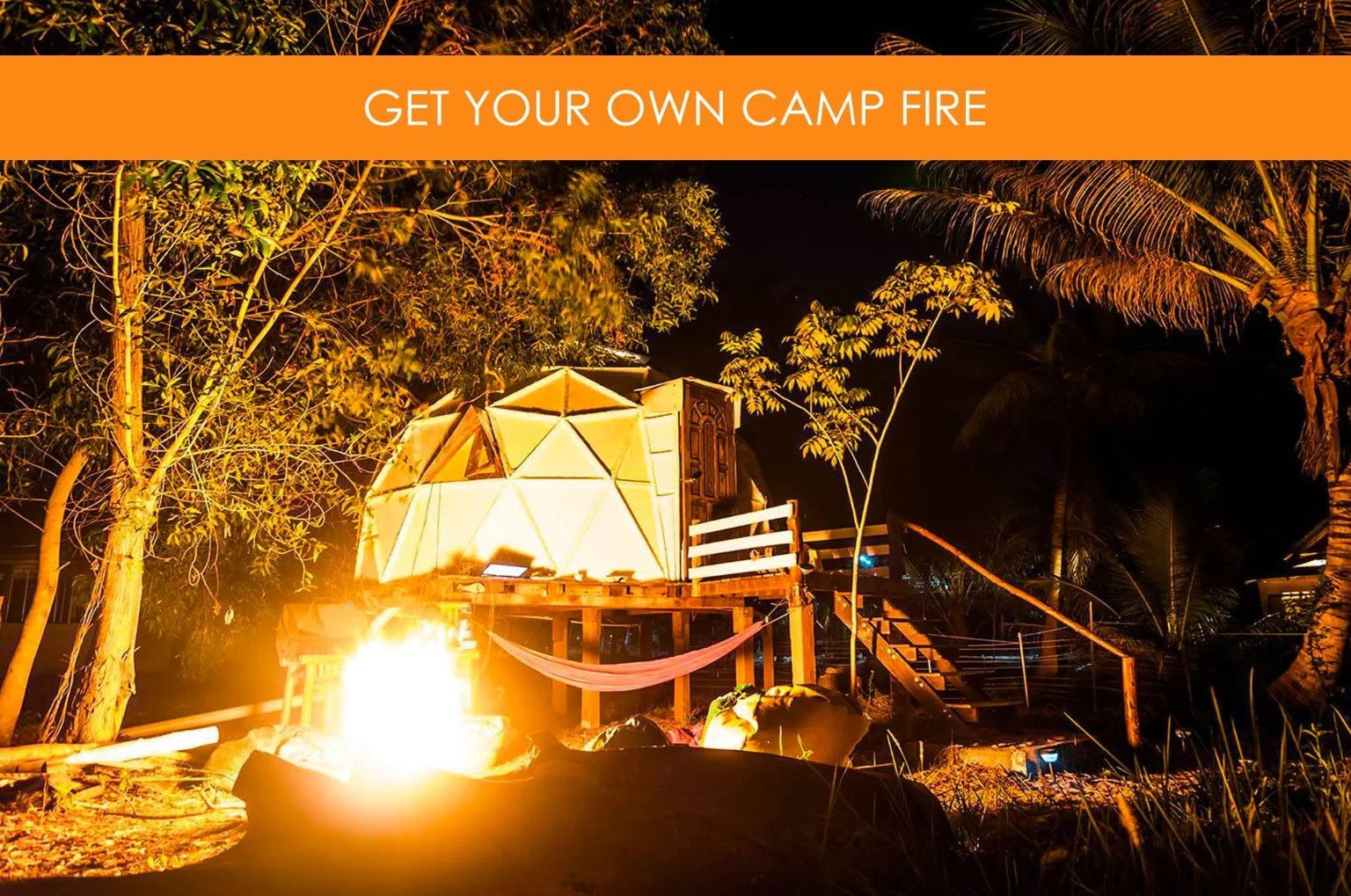
The firepit
It was the first idea that came to me once I framed the task this way.
The cost was zero. I gathered stones, arranged them in a circle and collected some branches. Suddenly, the house had an atmospheric place where guests could light their own fire in the evening. Even villas rarely offer that — more on this later.
This one opportunity to sit beside a real fire on a tropical island brought me many bookings.
And of course, it affected the ratings and reviews. People described the experience with warmth and gratitude, which strongly influenced future guests. For some reason, I especially remember people from England and Germany appreciating the fire.
VIP touch
I kept thinking, remembering my own rental experiences while travelling and what had been missing from them.
I remembered the tedious search for my accommodation in an unfamiliar place. So I decided to spare my guests that experience and began meeting them at the pier with a sign — like VIPs.
I also offered a friendly kind of concierge service: I helped them rent transport from a trusted place at a good price and sometimes even gave an express course in riding a motorbike.
Guests often wrote about my attitude rather than the house itself. This helped me earn Superhost status quite quickly and reach Airbnb’s first ten search results.


The heat
One of the most interesting solutions appeared when my teacher suggested raising the price almost threefold.
I felt deeply uncomfortable about it.
When he asked why, I said the house had no air conditioning. How could I charge a high price for a place that became so hot during the day? And I did not want to install an air conditioner for a number of reasons.
So I framed the contradiction:
At first it sounded absurd. But that is often what a good contradiction looks like: it means there is potential inside it. In reality, the two conditions only appear incompatible.
For the first couple of minutes, I had no ideas. Then one of the first contradiction-solving principles suddenly revealed an obvious answer:
The house can be hot while my guests are comfortable — if they are outside the house at that time. Again, so obvious!
I immediately realised that people did not come to the island to sit indoors. I simply needed to help them and give them more reasons to be elsewhere during the hottest hours.
Before each arrival, I began asking guests why they were coming to Koh Phangan, what they expected from the trip, what they loved and what interested them. Based on their answers, I made a personalised island map — a list of must-visit places specifically for those people.
Most guests came for only a few days and tried to visit as many recommendations as possible. They left early in the morning and returned after sunset.
In the end, my guests did not even know that the house became hot during the day.
3× the price
Once I saw that the previous solution worked, raising the price almost threefold felt easy.
Then something else interesting happened: bookings increased.
It turned out that travellers with higher budgets often set the lower price limit at $30 per night when searching for accommodation on the island. Experience had taught them that good things cost money.
While my dome was cheap, it simply did not appear in their search results.
Budget travellers, meanwhile, did not necessarily choose an unusual house. For them, a low price could matter more than the shape, the firepit, the smart home and all the other experiences.
By raising the price, I did more than charge more. I appeared in front of a different audience — people who were looking for an interesting experience and had the budget for it.
I also cannot help noting that guests who rented the house at the higher price turned out to be far more pleasant, interesting and grateful.
Remove the compromise
Even though everything was already working well money-wise, one compromise remained inside me: at these prices, many interesting people could no longer afford the dome.
And compromises are internal conflicts — which, as it turned out, can also be solved with TRIZ tools.
So, as before, I framed a contradiction:
An obvious solution came immediately: let people earn discounts, but without harming my economics. I offered up to 50% off under certain conditions:
- 15% for booking three or more months in advance;
- 15% for paying in cryptocurrency;
- 10% for sharing our Facebook page;
- 10% for using a promo code.
By setting these rules of the game, I resolved my internal conflict. Those who truly needed the discount could earn it.
1% improvements
I kept thinking and added several small things that other hosts almost always forget.
- A Bluetooth speaker guests could take with them and ride around the island with music. Favourite music makes any place feel more like home.
- A mosquito fumigator. I knew tourists were afraid of dengue fever, and guests appreciated this small gesture.
- An Alexa-powered smart-home system: lights and music could be controlled by voice. Nothing supernatural — yet for most of my guests, this was their first experience of controlling a house by voice. It also complemented the dome’s futuristic shape and continued its image.
- Beach mats and snorkelling masks. I noticed that tourists kept buying these things even though travelling with them was extremely inconvenient.
- An unlimited jar of cookies and coffee as a simple compliment for guests.
As you can see, none of these solutions was expensive, and each looked insignificant on its own. Together, however, they created a powerful effect: the feeling that the host genuinely cared about the guests’ comfort. And that always feels good.
The future
Following the same futuristic thread, I became one of the first hosts on the island to accept cryptocurrency.
That is how I received my first BTC and ETH. The benefits turned out to be greater than I expected.
This option became a reason to choose the dome for blockchain enthusiasts. For many of them, it was their first time paying for something physical with cryptocurrency.
Thailand’s major newspaper, the Bangkok Post, interviewed me about it and published an article.
In those golden days, BTC surged and gave me a 3× return in a month — which helped a lot with paying for my next visa.
Once again, I was amazed by how free, simple and fairly obvious the solution was.
Matryoshka
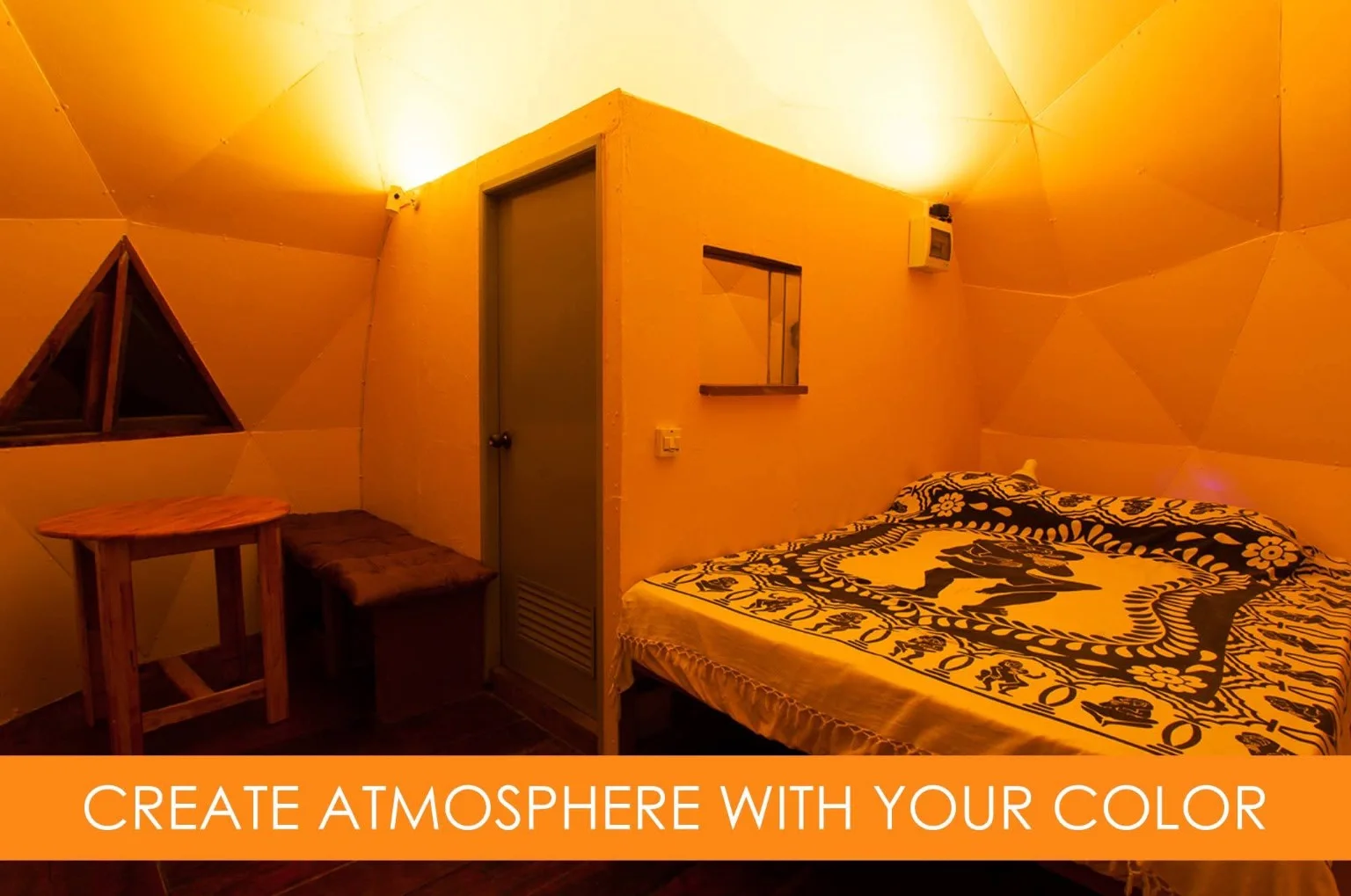
By this point, One Love Dome had accumulated many special features. The small problem was that all of them lived in the text description. In reality, people choose accommodation from photographs and read the description only after they are interested.
So I formulated another contradiction:
Here, a TRIZ principle called “Matryoshka” helped. It suggests placing one system inside another.
Following it, I placed the key messages directly on the photographs — neatly, briefly, one point per image.
Now a person scrolling through the photos could not miss those messages. They drew people into the detailed description and then towards a booking.
Turn harm into benefit
At the time, TRIZ helped me solve not only tasks but also problems as they appeared. One such case initially left me stuck.
An Open Mic Bar opened right next door. Twice a week, people played music there — very loudly and very late.
The first guests who encountered one of those nights demanded a refund and moved out the next day.
I could have started a conflict with the bar owner, gone to the police or searched for compromises. But Koh Phangan is a small island. Many people know one another, and usually it is wiser to negotiate than to fight.
So I formulated another contradiction:
One contradiction-solving principle suggests turning harm into benefit. It suddenly helped me see that the events were not only noisy — they were also impressive. I had attended that Open Mic during one of my first nights on the island, and it had made a strong impression on me.
So the first line of the house description presented it as an advantage. Almost every musician on the island came to the event, and you could hear anything there: from handpan and cello to rock and roll.
For extra effect, I arranged with the bar owner to give my guests two free drinks.
From then on, there was not a single complaint about the bar. More than that: musicians and singers began booking my house more often.
Once again, the solution was conflict-free, fast and free. All it took was a change of perspective.
Close the gaps
As with most short-term rentals, I sometimes had one- or two-day gaps between bookings.
Finding a new guest for such a short period was difficult.
So I began offering guests who were already staying in the dome before a gap the option to extend their stay at a discount — around 40%, if I remember correctly. For me, that was better than earning nothing on those days.
Guests liked the offer too. Many were visiting Koh Phangan for the first time and realised they had not had enough time to enjoy it. About half cancelled their next bookings and stayed at One Love Dome for several more nights.
This improved the house economics by one more step.
The last compromise
Together, all these improvements created a snowball effect. I received more and more five-star reviews, the house rating increased, it appeared near the top of search results, and occupancy grew.
Around 90% of bookings came through Airbnb and about 10% through Booking.com.
Airbnb’s interface was so easy and pleasant that Booking.com felt maximally inconvenient by comparison and constantly irritated me.
Leaving the platform completely and giving up 10% was foolish. But I did not want to tolerate it for the sake of rare bookings either.
That produced a very subjective but honest contradiction:
Under what conditions could this be true?
A TRIZ principle called Counterweight helped here. It suggests outweighing a negative factor with a positive one.
That led to the idea: if people paid me twice as much, Booking.com would suddenly become pleasant.
I confidently set the price at $100 per night with a two-night minimum. Although it looked illogical, people occasionally rented the house at that price.
I especially remember one group. They not only rented the house for $200 — they did not even sleep there. The group already had a villa, but they wanted to sit around a fire together and have a barbecue. Their villa did not offer that. My place did.
Moreover, they chose an evening when live music was playing next door and the stage was visible from the firepit.
You could say they did not pay for a house. They paid for an experience they would remember for life.
There are always options
Of course, this is not a story about a multimillion-dollar business. But for me personally, it became a turning point. Within a couple of months, I felt as though I had become a different version of myself — a more ingenious one. No other body of knowledge transformed me so strongly and so quickly.
As I saw the intermediate results, the same thought kept returning: if this works so well on me — a former dentist with no business experience — what would happen if TRIZ were given to truly powerful entrepreneurs with strong minds and resources?
That is how I began sharing this knowledge with other entrepreneurs, professionals and self-employed people. As I entered completely different industries and contexts and explored the methodology more deeply, I became convinced that TRIZ works equally well everywhere.
Even more, I began noticing that the same approaches work in purely human areas of life: relationships, psychology, motivation and health. I personally had a case where TRIZ helped me climb out of depression.
But that is another story — and another article.